Concrete pool decks in Vallejo CA - a surface that grips wet, bare feet
Slick, cracked or sinking concrete around your pool? We build decks that grip wet feet, drain away from the house and control cracking.
What goes into a good concrete pool deck in Vallejo?
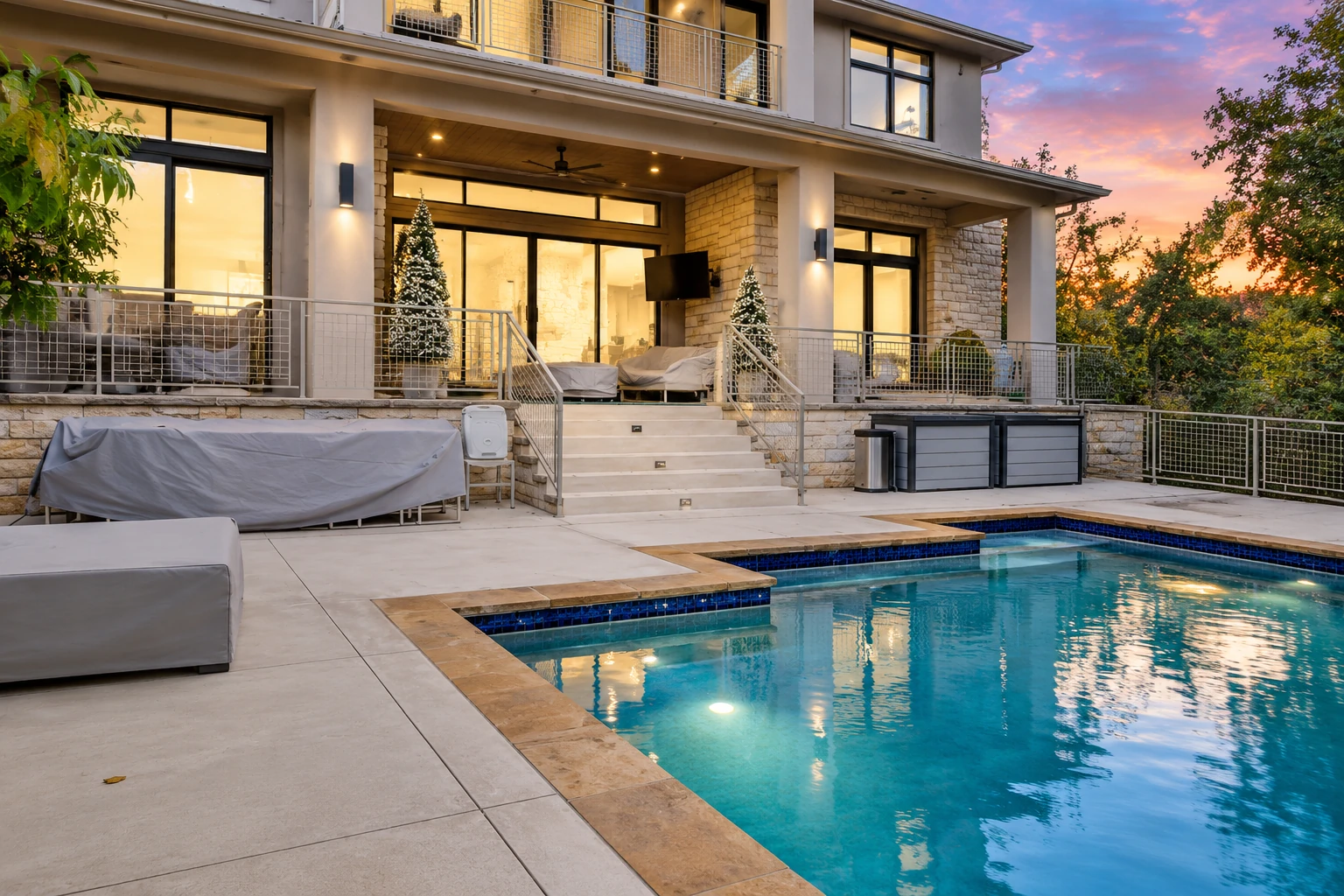
A concrete pool deck is the flat concrete our crew forms, pours and finishes around your pool. In Vallejo, a good one does two jobs: it gives wet, bare feet a surface that grips, and it sends water away from your house instead of toward it.
Most people call us because the deck they have is slick, cracked or sinking at one corner, or because a new pool needs concrete around it. We're based in Vallejo and work in the cities around it in Solano and Contra Costa counties. Price mostly comes down to the size and shape of the deck, the finish you pick, whether an old deck has to come out first and whether the ground under it needs work. Finishes run from a plain brushed texture up to decorative concrete. A curvy layout with drains costs more than a plain rectangle because there's more forming and more joints to plan. The schedule turns on those same things, plus the weather and the curing, which is the wait after the pour while the concrete hardens before you walk on it or set furniture out. Each city handles permits its own way, so we check with your city's building office before we start. If your deck needs a permit, we can take care of the paperwork and plan our work around the inspections. I walk the job with you at the estimate and put your own numbers in writing.
How we build a concrete pool deck
I start by walking the pool with you, because the finish and the water come first. Wet, bare feet are what make a pool deck different from a patio, so I steer you toward a finish that grips first and looks good second. We also work out where the water will run with the pool's layout before we build a single form. If there's an old deck, I check whether it's still moving, since that decides whether we're repairing, resurfacing or starting over. Then our crew breaks out what has to go, digs down to firm ground and packs the subgrade, the dirt and gravel the slab sits on, in layers so it doesn't settle later. Nobody sees that part once the concrete is down, and it's the first thing people want to cut from a budget. I'd still rather you spend on a solid base with a plain finish than put a fancy finish on a raked-out base, because a pretty top cracks just as fast when the ground drops under it. We set the forms to the slope we planned and pour early in the day so the heat doesn't leave a weak, dusty top. Then we finish the surface, often with a broom finish, a light brushed texture that gives feet something to hold. We cut control joints on time. These are shallow lines that give the slab a chosen place to crack. Then we let the concrete cure, clean up and walk you through how to take care of it.
A pool deck rarely stands alone. If your back door sits a few feet above the pool, we build concrete steps down to the deck with the same grip in mind. If you're adding a pool house or a covered spot for the equipment, it gets its own slab foundation, poured to carry a building.
Why Vallejo homeowners call Precision Vallejo Concrete for pool decks
I walk every deck myself
I come out to look at every job, write the estimate myself and stay on site running our crew while your deck goes in. The person who planned your drainage is the one standing there when the forms get set.
In business since 2017
I grew up on a farm where we fixed and poured our own, learned the trade on concrete crews around the Bay Area and started this business in 2017. We're known for explaining a job until it makes sense, so ask as many questions as you like.
A licensed, insured crew at your pool
We're licensed and insured. A pool deck means heavy work in your backyard right next to the pool shell, so it matters that the people doing it are covered.
Built for Solano County clay
About half of Solano County's soil is expansive clay, more than twice the state average. It swells when it's wet and shrinks as it dries, which is part of why decks shift. On ground like that, the packed base and the check for movement aren't extras, they're what keeps a deck flat.
On a pool deck, the part that decides how it holds up is the part you won't see, so ask any contractor how they'll handle the base and the water. When you're ready, send us a few details about your deck or call (707) 310-8309.
Get a written estimate for your pool deck
We reply to every request within one business day. The estimate is free, done on site and comes with no obligation. Send the deck's rough size, a few photos of what's there now and any pool design details you have, and I'll set a time to walk it with you, explain what I see and put it all in writing.
Pool deck finishes and layouts
Questions before you build a pool deck
What is the best way to keep a concrete pool deck from being slippery?
Pick the finish for grip first and looks second, because a pool deck stays wet and people walk it barefoot. Broom, textured, exposed aggregate, where the small stones in the mix show at the surface, coatings, overlays and decorative finishes all grip differently, and some run hotter underfoot than others. Very dark finishes can get uncomfortable in the sun, so a lighter one usually suits a deck that sits in full sun most of the day.
How much does a concrete pool deck cost in Vallejo?
In San Francisco, a concrete pool deck usually costs about $7 to $12 per square foot installed. That's a market figure, not our price. The things covered above move your Vallejo deck from there, mainly its size, the finish and what's under the old deck. Your estimate puts your own number in writing.
What causes a concrete pool deck to crack?
Most pool deck cracks come from movement. The deck and the pool shell can move differently, and the ground shifts under both, which our clay soil makes more likely. The usual practice is to follow the pool designer's isolation and joint details, which keep the deck from being locked to the shell. Control joints are planned around curves, drains, columns and corners, since odd, narrow panels crack easily. With a curvy or busy layout, ask early who holds the pool's design details and where the joints will go. Concrete cracks, and I'd rather tell you that up front and show you how we control it than let it surprise you. Your satisfaction, guaranteed.
Who is allowed to pour a pool deck in California?
A contractor licensed by the state is allowed to pour one. California's Contractors State License Board sets the concrete contractor license, which covers forming, pouring, finishing and installing flat concrete. Someone without a license can take on minor work only up to $1,000, a limit raised from $500, and only when the job needs no permit and they have no one working for them on it. A pool deck of any real size is past that line, so check the license before anyone pours.
Can you resurface an old concrete pool deck instead of replacing it?
Yes, if the old slab has stopped moving. An overlay, a thin new surface bonded over the old concrete, only holds on a deck that isn't shifting. When a deck is still sinking or heaving, the cause has to be repaired first, which adds work to the plan and the price, and sometimes starting over makes more sense. I'll tell you which one your deck is once I've seen it.
How do I make sure water around my pool drains away from the house?
Settle where the water goes in the first design talk, before anything is formed. A pool deck needs to send water away from buildings and toward or away from deck drains as designed, without washing dirty runoff into the pool. Getting that right early protects your house and keeps the pool cleaner. It also helps to ask how the crew will fit the skimmers, drains, equipment pad, pipes and movement joints into the layout before forming starts.
Other concrete work around the pool
- Concrete steps construction
If your back door sits above the deck, solid concrete steps with a good grip get everyone from the house to the pool without a slick wooden stair.
- Slab foundation building
A pool house, cabana or covered equipment area beside the new deck needs its own slab foundation, built on a packed base to carry a building rather than foot traffic.